The $2.5 Billion Webcam Industry Is Built on Exploitation — Here's What Every Platform Gets Wrong
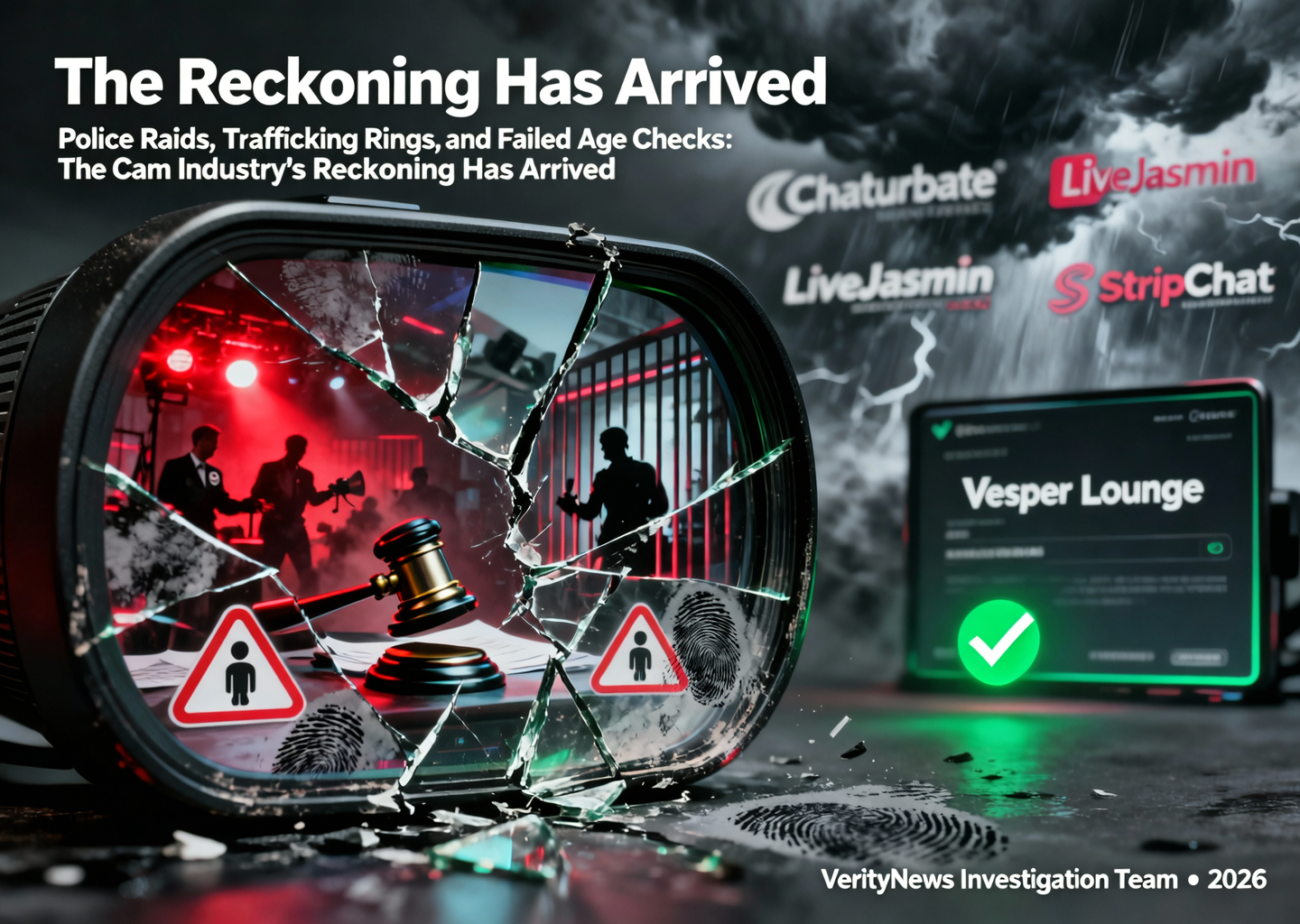
Chaturbate moderators are developing PTSD. Streamate is accused of wage theft against 1,200 performers. Colombian studios force 18-hour shifts. And 90% of every live show is stolen within minutes. Inside the cam platform wars — and why the next generation of streaming could look very different.
The live cam industry is worth $2.55 billion and growing at 7% annually. By 2033, it's projected to hit $4.67 billion. Eight platforms dominate the space: Chaturbate, StripChat, LiveJasmin, CamSoda, ImLive, Flirt4Free, Streamate, and Cam4.
They collectively serve over a billion monthly visitors. They've made their founders extraordinarily wealthy. And they've built their empires on a business model that systematically exploits the people who create their product.
Part I: The Platform Landscape — Who Controls What
The Big Three
Chaturbate is the largest platform by traffic — roughly 432 million monthly visits and an estimated website value of $1.75 billion. It operates a freemium tipping model where viewers watch for free and tip performers with tokens. Chaturbate takes approximately 50% of every token spent. The company is privately held by Multi Media LLC, based in California.
StripChat is the fastest-growing competitor, pulling 400 million monthly visits with 3.3 million daily unique users. It operates a nearly identical tipping model and has aggressively expanded into VR streaming and cryptocurrency payments. Its parent company, Technius Ltd, is registered in Cyprus.
LiveJasmin takes a different approach — it's a premium platform where most content is behind a paywall. It has roughly 200 million monthly visits and reportedly the highest average revenue per user in the industry, with viewers spending $200 to over $1,000 per session. The company was founded by Hungarian entrepreneur Gyorgy Gattyan, who became one of Hungary's wealthiest people from it.
The Rest
Streamate operates a premium private-show model and is owned by Flying Crocodile Inc. CamSoda, owned by Danni Ashe's company, positions itself as the "innovation" platform. Flirt4Free and ImLive are older platforms with declining market share. Cam4 is a Canadian-based freemium site that made headlines for all the wrong reasons.
Part II: What Performers Actually Earn
The platforms market themselves as empowerment tools — "be your own boss," "set your own hours," "unlimited earning potential." The reality is considerably less glamorous.
Payout Rates: The Industry's Dirty Secret
| Platform | Performer Gets | Platform Keeps | Notes | |----------|---------------|----------------|-------| | Chaturbate | ~50% | ~50% | $0.05/token to performer; viewer pays ~$0.10/token | | StripChat | 50–60% | 40–50% | $0.05/token base rate | | CamSoda | ~55–60% | ~40–45% | $0.05–$0.055/token, $20 minimum weekly payout | | LiveJasmin | 20–80% | 20–80% | Tier-dependent. New performers start at ~20–30%. Only top earners reach 80% | | Flirt4Free | 30–50% | 50–70% | 2.7 cents/credit at low volume, up to 5 cents at 200K+ credits | | Streamate | 25–35% | 65–75% | Shows only. 50% on clip sales | | ImLive | ~30% | ~70% | Widely criticized as the lowest in the industry | | Cam4 | Unclear | Unclear | Multiple complaints about inability to cash out funds at all |
But these numbers hide a worse reality: income concentration is extreme. On Chaturbate, over two-thirds of all viewer tips go to just 10% of performers. The vast majority earn far below minimum wage when accounting for hours spent streaming, preparing, and promoting.
When platforms advertise "top performers earn $10,000+ per month," they're describing the statistical outlier — not the experience of 90% of their workforce.
The Studio Problem
Many performers don't even receive the platform payout directly. A December 2024 investigation by Human Rights Watch into Colombian webcam studios — which produce content for Chaturbate, StripChat, LiveJasmin, and BongaCams — found systemic exploitation:
- 75% of interviewed performers reported being coerced or threatened into performing acts they didn't consent to.
- Workers reported 18–24 hour shifts in unsanitary conditions — cockroaches, bedbugs, bodily fluids on shared equipment.
- Studios retain up to 70% of what platforms pay, on top of the platform's own 40–60% cut. Performers receive pennies.
- 49 out of 50 models never saw or signed the platform's terms of service. Studios controlled all accounts.
The International Consortium of Investigative Journalists (ICIJ) published parallel findings, documenting how the "billion-dollar webcam industry" operates through layers of corporate intermediaries specifically designed to insulate platforms from accountability.
Part III: The Lawsuits Piling Up
Chaturbate — Moderator PTSD Class Action (2025)
In July 2025, former moderator Neal Barber filed a class-action lawsuit alleging Chaturbate failed to provide mental health protections for content moderators. Moderators were routinely exposed to child sexual abuse material (CSAM), self-harm, and extreme violence — without content filters, wellness breaks, or access to counseling.
Barber developed clinical PTSD. The lawsuit, supported by the Business & Human Rights Resource Centre, alleges that Chaturbate's parent company knowingly subjected moderators to psychological trauma as a cost-saving measure.
Chaturbate — Age Verification Failures
Chaturbate's parent company Multi Media LLC paid $675,000 to the state of Texas for violating age verification laws — a settlement that 404 Media described as a slap on the wrist for a billion-dollar operation.
In May 2025, an Olathe, Kansas mother sued multiple pornography websites — including Chaturbate — after her 14-year-old son accessed the platforms. Kansas had enacted age verification requirements that the platforms failed to implement.
Streamate — Wage Theft Against 1,200 Performers
This may be the most consequential case in the industry. A federal judge granted certification of a Fair Labor Standards Act (FLSA) collective of over 1,200 Florida webcam performers who allege that Streamate:
- Misclassified performers as independent contractors to avoid paying minimum wage and benefits.
- Withheld wages for free-chat time — the unpaid hours performers spend in open rooms attracting paying customers.
- Kept approximately 65% of tips — which the FLSA explicitly prohibits employers from doing if the workers are classified as employees.
If the performers prevail, Streamate could owe back wages, penalties, and damages that would reshape how every platform in the industry classifies its workforce.
StripChat — Fighting EU Regulation
StripChat's parent company Technius is engaged in a legal battle with the European Commission over the platform's designation as a Very Large Online Platform (VLOP) under the EU's Digital Services Act. VLOP status imposes enhanced content moderation obligations, transparency requirements, and algorithmic accountability — requirements StripChat is fighting to avoid.
The Commission briefly revoked the designation in 2025 based on updated traffic data, but legal proceedings continue. The case will likely set precedent for how adult platforms are regulated across Europe.
Cam4 — The Catastrophic Data Breach
In 2020, Cam4 exposed 10.88 billion records — one of the largest data breaches in history. The leaked data included:
- Full names and email addresses
- Payment logs and partial credit card data
- Password hashes
- Sexual orientation and gender identity
- Complete chat transcripts
- IP addresses and location data
For a platform whose users depend on anonymity, this was catastrophic. Despite the scale of the breach, no significant GDPR fines were publicly reported — raising questions about regulatory enforcement in the adult industry.
Part IV: The Systemic Problems Nobody Is Fixing
Problem 1: Content Piracy (90% Leak Rate)
If you stream on Chaturbate, your shows have approximately a 90% chance of being recorded and redistributed without your consent. Automated recording bots capture every live stream and distribute them across more than 100,000 piracy websites within minutes of broadcast.
The largest operation is Recu.me (successor to Recurbate), which hosts 217 million hours of stolen content from 391,000 creators and receives 7.48 million monthly visitors. Its estimated revenue: approximately EUR 747,000 per month — built entirely on stolen labor.
DMCA takedown requests are largely ineffective. Many piracy sites operate from jurisdictions that ignore US copyright law, and new mirrors appear faster than old ones can be removed.
No major platform has implemented meaningful technical countermeasures — because doing so would require restricting how viewers interact with content, which would reduce engagement and revenue.
Problem 2: No Real Safety Infrastructure
Existing platforms treat safety as a cost center, not a feature. Moderation is underfunded and traumatizing for the humans who do it. Age verification is implemented only when legally compelled. Content policies are enforced inconsistently, and performers report wrongful bans with no appeals process.
Problem 3: The Independent Contractor Fiction
Every major platform classifies performers as independent contractors. This means no minimum wage, no benefits, no workplace protections, and no obligation to provide a safe working environment. The Streamate FLSA case could upend this model — but even if it succeeds, it will only directly affect one platform in one state.
Problem 4: Payment Processing Hostility
The adult industry faces uniquely hostile payment processing. Major card networks impose higher chargeback rates, and viewers frequently file chargebacks after consuming content — effectively stealing the performance. Performers absorb the loss. Platforms absorb none of it.
Part V: What a Next-Generation Platform Could Look Like
The problems in the cam industry aren't technical mysteries — they're business choices. Every failure described above has a known solution. The question is whether any platform is willing to implement them at the cost of short-term margins.
Here's what a platform built for performers — rather than built to extract from them — would prioritize:
Higher, Transparent Payouts
If a platform offered 70–80% payouts with fully transparent accounting — where performers can see exactly what viewers paid, what the platform took, and when the payment will arrive — it would immediately become the most performer-friendly platform in the industry. The current leaders keep 40–75% and disclose nothing about how revenue flows through studios and intermediaries.
AI-Powered Safety (Not AI-Powered Extraction)
The current platforms use AI primarily for engagement optimization — keeping viewers watching longer and spending more. A performer-first platform would deploy AI for:
- Real-time chat moderation that catches harassment and illegal requests before they reach the performer — not after.
- Automated content protection that detects and disrupts recording bots, watermarks streams with invisible forensic markers, and issues automated DMCA takedowns.
- Smart audience engagement tools that help performers manage their rooms — AI assistants that welcome viewers, track tip goals, and handle routine interactions so performers can focus on their show.
Virtual Backgrounds and Production Tools
Most performers stream from their homes. Current platforms offer zero production support — performers must buy their own lighting, cameras, and background setups. A platform that offered browser-based virtual backgrounds using real-time AI segmentation would instantly elevate production quality while protecting performer privacy. No green screen needed. No home address visible in the background.
Direct Payment and Chargeback Protection
Cryptocurrency integration isn't just a novelty — it solves the chargeback problem. Crypto payments are irreversible, eliminating the scenario where a viewer watches a full show and then reverses the payment. Combined with traditional payment options for viewers who prefer them, this creates a hybrid system that protects performers without limiting audience reach.
Genuine Age Verification and Performer Verification
Not as a grudging legal compliance measure, but as a brand differentiator. A platform that can guarantee to viewers that every performer is verified, and guarantee to performers that every viewer is an adult, creates trust that no existing platform offers.
Part VI: The Numbers Don't Lie
The cam industry's growth is accelerating despite — or perhaps because of — the exploitation baked into its business model. But the cracks are showing.
Performers are organizing. The Streamate FLSA collective represents 1,200 workers — and its outcome could trigger similar actions across every platform.
Regulators are closing in. The EU's Digital Services Act, the UK's Online Safety Act, and 25+ US state age verification laws are creating a compliance burden that favors well-run platforms over those cutting corners.
AI is changing the economics. The same technology that enables AI-generated competitors also enables legitimate tools that make real performers more productive, safer, and better compensated. The platforms that deploy AI for performer empowerment — not performer replacement — will attract the talent.
The talent is the product. Every platform knows this. But only the platforms willing to treat performers as partners rather than extractable resources will survive the regulatory, legal, and competitive pressures ahead.
The $2.55 billion question isn't whether the industry will change. It's whether the change will come from within — or be imposed from outside.
Sources: Verified Market Reports, Human Rights Watch, ICIJ, Business & Human Rights Resource Centre, 404 Media, Red Bank Legal, ARTICLE 19, Huntress, Leakless.io, LiveCamReviewer, University of Amsterdam
If this matters, share it